Our school curriculum is driven and shaped by our school vision, which informs everything that we do.
St Nicholas provides a welcoming, inclusive and aspirational learning environment at the heart of its community. We nurture, encourage and support all children, adults and their families to be the best as God intended. Following God’s example of love and trust, we develop resilience and creativity in all we do.
Learning, loving and encouraging through Christ.
An uncompromising focus on pupils’ personal development has made St Nicholas Church of England Primary Academy a place where pupils always come first. Ofsted 2019
At St Nicholas, we have a real love of music. Whether through music lessons, singing practice, choir, or joining together to sing our favourite songs during Friday’s celebration assembly, music plays a valued and vibrant role in our school life. We all experience the joy that music can bring — from listening and dancing to our favourite tunes, to singing songs we love. We also recognise the powerful impact music can have, whether creating drama, building tension, or enhancing emotion in films and performances.
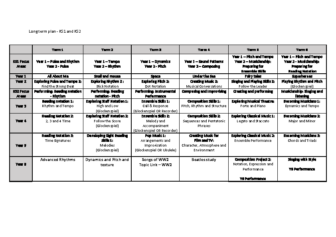
At St Nicholas, we aim to give every child the opportunity to experience the power of music to enrich their lives, while also benefiting learning across the wider curriculum. Our music curriculum is designed to foster a lifelong appreciation of music, developing essential skills through high-quality weekly lessons. In Early Years and Year 1, music is taught by class teachers using the Kapow scheme of work, which provides a clear and progressive structure. From Years 2 to 6, pupils receive weekly music lessons from our specialist music teacher, Mrs Vincent, following the Sing Education curriculum. This builds upon the foundations established through the Kapow scheme.
Through these lessons, children are introduced to a wide range of musical experiences, including singing, active listening, composing and playing instruments, enabling them to develop confidence, creativity and a deeper understanding of music.


Singing, playing instruments, performing and composing are enjoyable, creative and fulfilling learning experiences in their own right. Research also shows that musical learning extends well beyond the music curriculum, supporting children’s wider development.
- Making music in the Early Years and primary phases develops listening and concentration skills, while enhancing children’s ability to discriminate between sounds. This strengthens phonetic awareness and supports the development of language and literacy skills.
- Music has a positive impact on spatial reasoning, which is closely linked to mathematical thinking, as well as on physical coordination, supporting fine motor control and handwriting.
- Music-making in small groups promotes teamwork, cooperation and the development of leadership skills, while also being highly motivating and enjoyable.
- Opportunities to perform help to build pupils’ confidence and self-esteem.
- Music supports social and emotional wellbeing, helping children to regulate emotions, improve mood and relieve stress.
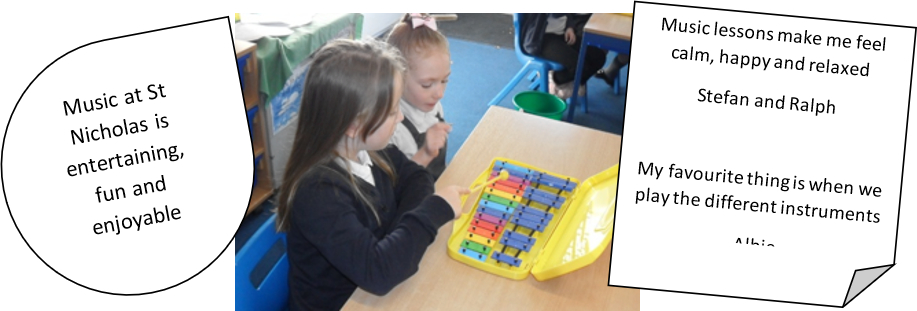
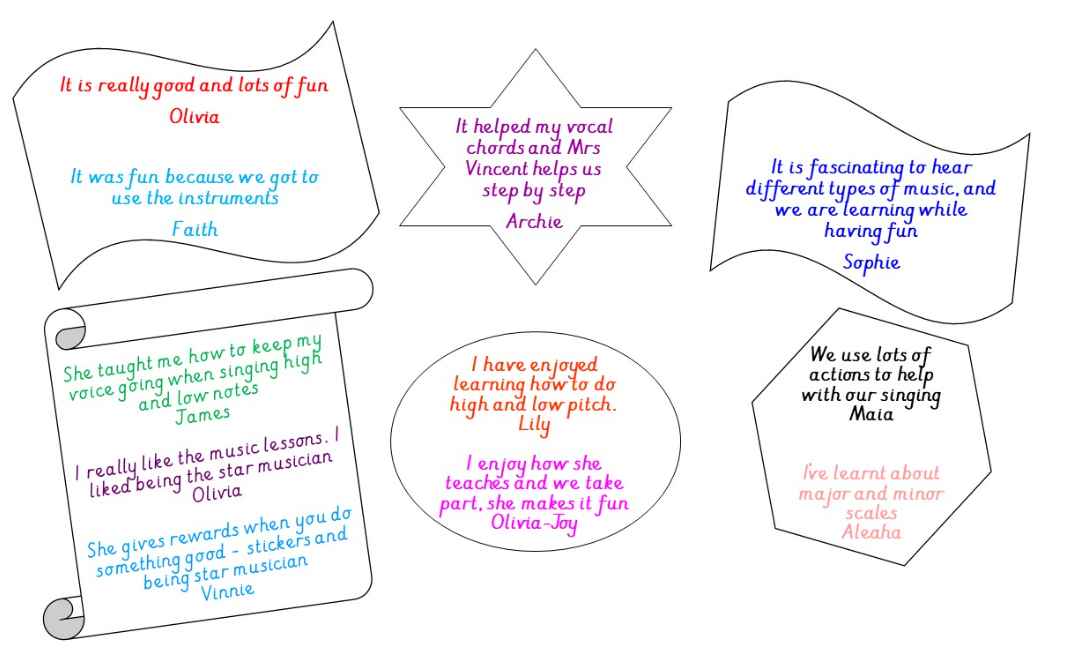
At St Nicholas, we are fortunate to be part of Sing Education. Pupils in Years 2–6 receive weekly music lessons from a specialist teacher, building on the skills developed through the Kapow scheme and ensuring high-quality, progressive musical learning for all.


 Address
 Email
Email Telephone